Ask Me Anything, Part 2
Ten questions on inner work, holding others without losing yourself and trusting abundance. A long, slow walk through the practice of being seen.

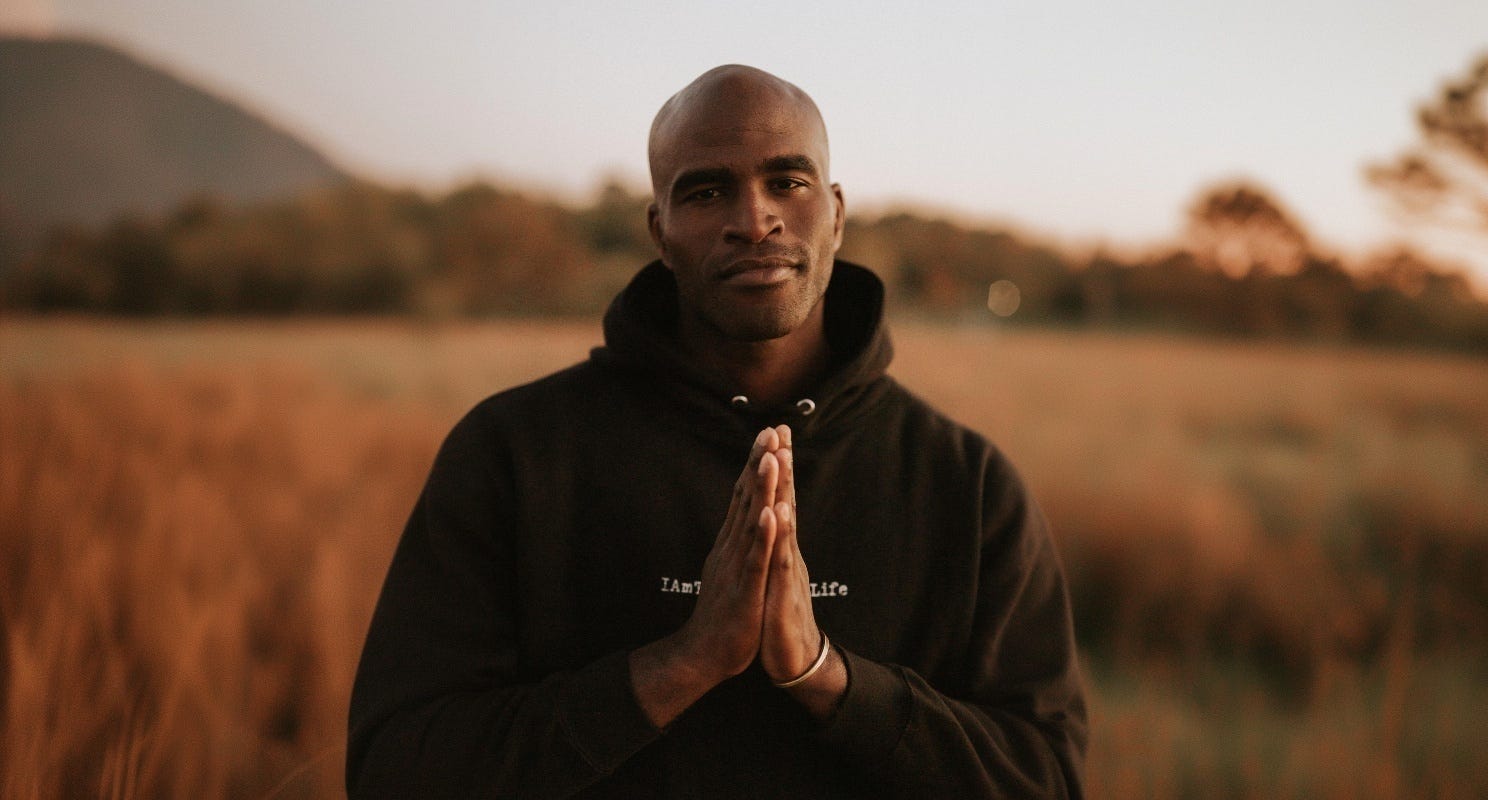
This is the read-along companion to the latest episode of Emotional Evolution with Joel Cross. Press play and read with me, or read it on its own.
This is Emotional Evolution. I’m Joel Cross. Welcome to the sacred space for inner exploration that expands our self-awareness as we discover how what we feel supports who we are becoming.
Close your eyes. Take a moment to breathe in deeply. Tune into your heart space and notice what state of being you’re in. Breathe it out, soften and let go as we set an intention for our time together. May you be available to witness what you’ve never witnessed before about yourself, so that you might heal and grow.
Hello, beautiful souls. And welcome back.
I’ve been a bit busy these last few weeks with some beautiful goings and comings. Some travel. Some sharing of old space. Including the deep honor of collaborating with Dene Logan, whose light I’ve been in such deep reverence for since I read her book Sovereign Love.
To get to hold space and be invited in for the Redefining Relationship Retreat was a beautifully heart-expanding experience. What an honor. I’m still processing as I settle back in, taking in all of the beautiful exchanges with the attendees and the gift of the relationships in my life. All of my loved ones, family and friends, especially in this season. Feeling more seen and loved than ever.
Just a sense of deep gratitude. Not that everything is quote unquote perfect. I don’t know that that’s something I aspire to. But deep gratitude for all of the beautiful souls in my world.
I want to say thank you for your patience with me over the last few weeks. We started the Ask Me Anything, and I told you I’d be back for part two. That’s what I’d like to get into today.
So I’m going to start with the fourth cluster of questions, which are all about the inner work. I’ll go right down the list.
Inner work
How do you start meditating again when your nervous system has been hijacked?
A deep bow of compassion to the ask of this question.
We say the nervous system has been hijacked because that might be easier to express than whatever the lived experience or the stories underneath, or the extreme trauma, or whatever it is that caused the nervous system to be hijacked, that’s too big to name. So just holding you in love.
I think the answer is always: start where you are. It’s always start where you are.
For me, and I encourage you, the answer is always to keep it simple. Simplicity, simplicity, simplicity.
What I mean by that is, start with the ground underneath your feet. If you’re just getting more settled after your nervous system has been hijacked, start small. You can start with a single breath. Just taking a slow belly breath in. I’d encourage maybe a six count. This is coherent breathing. Six seconds in, six seconds out.
Breathing in: two, three, four, five, six. And out: two, three, four, five, six.
Continuing in that way, settling into your body. Allow yourself to witness any thoughts or stories that arise with compassion, without judgment, as art. The practice is always the same.
And if they are related to whatever hijacked your nervous system, simply rest in your essence. Rest in the part of you that is beyond comprehension. Rest in the part of you that knows your inherent worthiness, that knows you are sovereign, that knows you are free to create whatever you want and need in this lifetime.
That’s where it starts. Sending you so much love, dear one.
What is your perspective on magic mushrooms?
Great question. To be clear for those who may be uninitiated in this realm, I believe they’re speaking to psilocybin, the active component in magic mushrooms, which is named as a hallucinogen.
I’ll say transparently: I’ve had a few experiences with magic mushrooms. Psilocybin is the term I’m going to use. And I believe with great intention. Intention being, I’m here to heal, I’m here to learn, I’m here to expand and grow.
Then there’s also set and setting. The setting being, where am I? Am I in a safe environment? And who are the set of people around me? You’d want someone you really trust, someone who’s skilled, whether that’s more on the ceremonial side as a shaman, if that resonates with you, someone who’s been initiated into holding space in that way and in that context. Or on the clinical side with a healthcare professional who’s initiated, who can monitor your dosage and your well-being.
In that context I think it can be very useful. I think it’s great in medicine. That said, my take on magic mushrooms is similar to my take on ayahuasca, which is similar in the way that it can work, but maybe twenty to one hundred times more powerful in my experience. It should be self-directed as far as you connecting and working with that plant medicine.
I don’t speak about these things very often. Many people come to these medicines with the idea that they are like any other pill in the Western world. A pill for every ego. Take this and you feel better. Take this and you heal your addiction. They come in quite unconscious, not realizing this is an initiation.
Psilocybin is a bit more mild, although quite intense as well depending on the dosage. It’s an initiation into your shadow. Whereas something like ayahuasca will take you for the journey no matter what. You have to be really ready within yourself to surrender.
We use that phrase quite a bit. What I mean is surrender your resistance. Surrender your fear. Know that you can explore the depths of yourself without drowning.
My experience of ayahuasca and psilocybin (I’ll group them together since we’re talking about it now) is that they show me aspects of myself through wildly different experiences of the world. Through imagery that doesn’t make sense in our normal day-to-day. Through perceptual experience and my senses. Through letting go of my attachments to ego and a separate self. Ultimately getting into a fuller experience of consciousness.
There’s a vast landscape and a rabbit hole that you go down when you partake in these experiences, hopefully with deep intention and consciousness. That can be quite transformative, or quite harmful if you aren’t ready.
Magic mushrooms and ayahuasca are great medicines that, in my opinion, should only be used if you’re feeling a call from within. Your inner wisdom, your inner knowing, drawing you in. They should never be used unconsciously. They are potent medicines that could easily cause a lot of harm if you aren’t ready to be with yourself.
Is it actually possible to fully heal, or do we just stitch back up and live with it?
It’s so interesting, this term fully heal, even the context of this question. A deep bow of reverence to whatever it is you’re working to process and move through and heal, because I can sense its earnestness.
My perspective on healing, on fully heal, is outside the paradigm that I view healing. Within our inner realm, all the things that come up, it’s not about never experiencing them again. It’s not about them not having an impact in your world if you’re activated or something comes up.
Healing is about our capacity to hold suffering. Our capacity to hold suffering.
I love partnering that definition with the quote that has been so liberating for me from Thich Nhat Hanh: all suffering comes from misunderstanding. I’m speaking to suffering, not pain. Not physical pain. Not the initial bodily response. But the suffering that comes from mental anguish and unrest and lack of closure or understanding that we create and perpetuate unconsciously.
So if our healing is expanding our capacity to hold suffering, and suffering is misunderstanding, then it’s really a depth of understanding that we reach that allows us to heal. Meaning: oh, these are the stories I’m telling about myself and others. These are the things I don’t know about myself and others that are literally made up. Perceptual filling that happens in relation to what is known and unknown as a survival tactic.
Not just intellectually understanding, but knowing how it shows up somatically. Where does that unrest live in your body? And how do you get back home?
To me, healing really is akin to a musician playing a guitar solo. When you’re a beginner, you may play a note you didn’t intend to play, and you might just stop in the middle of the song. Now it becomes bigger. Folks are looking at you like, why did he stop? And now all we remember is that one note that didn’t get played correctly, because we stopped playing. We’ve forgotten that there’s a song playing in the background, or what is the next chord change.
As we expand our capacity to hold suffering, you may play a wrong note. But you remember there are no wrong notes, and you keep playing. You frame it as a beautiful chord substitution that creates a bit of tension in the moment and release. If you do it quite well, most people don’t even know that you played a note you didn’t intend to. Nothing is lost.
In our day-to-day, when we might feel a sense of activation or resistance or tension with an experience or person, we can breathe in and know: there are no wrong notes. This is a part of my journey that I need to dance with in this moment. You stay connected to your breath. You stay anchored and available to what wants to emerge and be remembered, or to be cultivated as a deeper understanding. Somatically, psychologically, intellectually. Whatever way it wants to be experienced and processed and deepened, or all three.
So let go of this stitch back up and live with it. Be present and dance with it. Know it’s a part of your innate wisdom that you get to alchemize into the greatest guitar solo ever.
How do you let go of something that hurt you deeply? The disloyalty of someone you gave your heart to, who didn’t treat you with the respect and empathy you deserve, and seems unwilling to accept things as they are?
Offering you compassion, dear one. Thank you for your earnest seeking of regulation and freedom.
I’m seeing words like let go of something that hurt you. That’s beautiful and resonant. And accept things as they are. And, how do you get out of the repetitive thoughts?
Letting go and accepting really is how you get out of the repetitive thoughts. But it’s not a seeking the escape. It’s actually going deeper in.
To me, accepting things as they are also means accepting the current state that you’re in. All of these things are playing on loop. In the Beautiful Souls Community, part of the Emotional Evolution teaching is sharing about the Zeigarnik effect, which was discovered by Bluma Zeigarnik. It speaks to how we focus on what feels unfinished.
She noticed this in waiters at a restaurant one day. The waiter who came to her table of seven remembered everything perfectly, all of their orders and details and changes, until the plates were handed out and everybody was happy and received what they had wanted. Then the memory dropped. She studied this and noticed it’s true for all of us. It’s the reason songs play on loop and get stuck in your head, and the only way to get that out of your head is to go back and listen to the song in its entirety and complete it.
The deeper understanding here is that acceptance is an act of completion. An embodied completeness within yourself, that if things could have played out any other way, they would have.
And letting go is really about letting go of trying to change the fact that it hurts right now. The way we do that is by changing the framing. Instead of framing it as being a victim, letting go that they hurt you deeply, or from the codependent aspect. I’m not dismissing that whatever they did caused harm. I’m pointing out that the framing is the one that keeps you stuck and in a state that you don’t want to be in.
A liberating framing is: I feel this pain deeply because I cared, and it mattered. I loved the experience of being with this person, and the relationship we had.
Most importantly, understanding that you loved it because of what it brought out in you. What kind of person, what kind of freedom did you feel within yourself? What kind of person did you allow yourself to be? What did you witness in them that represents something you wanted to embody more deeply, before the hurt?
Instead of seeing the pain as a signal that something’s wrong, you can see that experience of pain or hurt or suffering as a lighthouse toward what you want to embody more of within yourself. And what you learned and experienced within that relationship. And how taking responsibility for how you process and how you feel gives you the handlebars on the bike to pedal in the direction of your liberation.
On the way, accepting the fullness of your humanity. Accepting the natural pace of change. Because underneath that question is how do I get rid of this? And the answer is: it’s a part of the journey, dear one. This is for everyone listening. It’s a part of the journey. It’s a part of the journey. I don’t say that lightly.
If we can look deeply, we can see that it’s the part that helps us evolve if we can hold our hurt well.
Sending you deep love.
Holding others without losing yourself
How do you balance protecting yourself from people’s limiting energy and still caring for them?
Deep breath, as Dene Logan would say quite often. I love that reminder. Just to return home to the breath when we can relate to an experience that’s quite activating.
What I want to say about protecting is that I don’t use that word. Defense is the first act of war, and I don’t want to be in war with anyone or their energy. So I’d first say, lay down the word protect. I’d actually lay down my shield. This is my approach.
You named their limiting energy. I would name it as their woundedness. Whatever that narrative is, or the way they express it (probably in their body as well as their speech and the way they view the world), is something framed from an experience of their own wounding. It’s also an expression of how they’re outsourcing their power. Because we see the world as we are.
When I think of it in that context, even if it’s directed at me as a projected limitation or a way of not seeing me, I now see that as an opportunity for me to deepen my compassion. To understand that as above, so below. To remember that everything someone does is about them, and what they can perceive and allow themselves to witness in the world, based on the balance and the state of their heart.
So I offer compassion. But I also make sure it’s true compassion and not idiot compassion.
To use an example, a question that came up that was quite similar in the recent Redefining Relationship Retreat I did with Dene Logan, I was sharing my ideas on a regenerative relationship rooted in Carol Sanford’s work. One of the principles is seeing essence and potential. What is the essence of the person beyond what they’re saying? Because we all have this unconscious blind spot to our experience of being and expressing in the world. Noticing that the essence of this person may be this wounding, this not-seeing, this scarcity energy, softens something in me.
I can see them not as an enemy I need to protect myself from, but as the loved one they are, that might need my compassion. Not the enabling kind of compassion where I coddle, or betray myself to be in their presence, or whatever caring for them might mean in your context. The compassion that knows that their journey is theirs. That also wants to support their capability development, which is another principle of regenerative relationships.
Meaning: how can I support their ability to develop a sense of self-awareness and framing? Not from a place of fixing.
There’s another aspect of this teaching that talks about the paradigms we operate or approach relationship or the world in. One is extract value. This is consumerism, capitalism, trying to get a “high value man or woman” kind of energy.
The second is arrest disorder, which is fixing and managing system symptoms. This is what we can easily get into when we see somebody in this energy, because this is our codependence showing up, trying to change them so that we feel okay. We’ll frame it as only so they feel okay. But it’s coming from this deep need to be okay within ourselves.
Then there’s do good. This is the best thing in my understanding, and I want to support this. Doing good sounds good. But the pitfall is that we fall into an ego and end up doing more emotional labor than is really good for the whole. We start to control and disempower others from their agency.
Versus the regenerative paradigm, which is showing up in a way that supports the whole system. Trusting life. Trusting their agency.
When you can have compassion, that’s caring. But a more mature version of caring is to also communicate in a way that offers it without belittling. It might just be energetic. While also offering a bit of space. Compassionate space, for them to become more self-aware.
Often that means less is more. If they come to you with the limiting statement, you can say your truth.
At one point in time, there was someone in my life I was trying to share a beautiful experience with that was quite a turning moment for me, that I wanted to celebrate with them. And they said, wow, you’re a nobody, how did you get that? It hurt. It felt like a lot of limiting energy. And I said, no, I’m somebody. I’m sorry that the idea that there are nobodies even exists for you. But I think you’re somebody too.
It can be that simple. I can say what’s true for me. Hold compassionate space for that without shaming. And also uplift.
All while taking a lot of deep breaths. Because underneath all of that is the activation of my own insecurity, or the insecurities that we all carry, which are very human and all okay.
Why do I feel alone even when others are around me?
I know that so well. I know that expression so well. Sending you love, dear one.
It really comes down to this authenticity versus belonging dilemma that we all face. Modern psychology speaks to it. Gabor Maté talks about it a lot in his book The Myth of Normal. Essentially, it’s where we betray who we are so that we belong to the group.
It sounds like there’s a part of you that isn’t being seen or expressed, because you feel like if you do, you won’t belong in the space or feel connected. Maybe part of that is your story. Maybe part of that is actual truth, because you know the individuals around you well.
But ultimately, it’s a sense of self-abandonment. You’re surrounded by people you’ve decided to surround yourself with. But the only way to be around them is to betray yourself. So you feel very alone.
I’ve been in relationships like that, of all contexts. Romantic. With family. With certain people I used to call friends.
Deep bow to you, dear one, and the journey and the inner dilemma you’re processing through. Also, excited for your journey. Because the way out is simply to be all that you know yourself to be, and trust that those who really want to know you and connect with you and be intimate with who you really are, will stick around for that to be revealed. And to process through whatever is revealed through them as your dynamic changes.
This is the deep work we do in the Beautiful Souls Community every day. Just dropping this in here, because on June 5th we’re opening our doors again for the summer season. Our big theme for the summer is the practice of being seen. We’re slowing it down at a pace the nervous system can handle, so that you can first see yourself in the first half of the summer, and then show yourself in the second half of the summer, in a gentle and intentional way. Creating space for all those around you to shift as you shift, without being overwhelmed.
If that resonates, you can learn more about it at my website, asoulcalledjoel.com, and I’ll put it in the show notes here.
What’s your advice on staying whole as a mother when you feel the pain of your own child?
Deep bow to you, dear mother. For your pain. For your desire for your child and your own wholeness.
As someone who is not a parent, and certainly not a mother, I’ll offer my two cents. As always, take what resonates and leave the rest.
First, I want to say that you never lose your wholeness. Part of being human is to feel that tension and that suffering as you hold space for the suffering of your dear ones.
I feel like what life is calling all of us to, through all of these questions, is to cultivate greater emotional resilience. This is why I’ve changed the name of this podcast and been more intentional about naming that my mission is to support our emotional evolution.
As you allow yourself to be present to your child’s pain, stay connected to an identity of self that is broader. Broader than the body. Broader than the fear of losing oneself. Broader than the limited narrative that your role as a parent is to keep them from harm in every moment.
Of course you want to keep them safe. Or, to state it more precisely, to know that you can’t keep them from all harm. Not when they leave your home, not if life grants them an experience beyond your control.
Big deep breath.
With this question, what I’m sensing is this identity as a mother. I can understand that so many parents may have this question within them: am I a good mother? Am I a good father? When you see your child suffering, that becomes the bar.
I would encourage you to let go of this good or bad narrative. You’re obviously a caring mother. Turn to what is this pain and suffering offering us? What is the gold that is being mined through the experience? Why do I think my wholeness is at stake? How have I outsourced my power? What narratives are creating this emotional experience?
When you open your perception beyond the pain, or the view that this will break you, there’s an opportunity. To remember that life is actually supporting you. Not in the way you want, most certainly. But in a way that is beyond your want. In a way that’s reminding you that your wholeness is never at stake. In a way that’s reminding you that you get to create, or rather, you are a co-creator of, your experience.
When you feel those stories coming in, or the fear of losing yourself, remember who you are. Remember that your identity is ever evolving and expanding, moment to moment, breath to breath. You have your outer experience and you have your inner experience.
Breathe. Take great care of yourself. Get in your meditation practice. Get in your journaling practice. Let loose those old stories. Plant seeds daily that are rooted in compassion, rooted in love, rooted in the wholeness and your power.
Give yourself grace to be held by your community in the moments when you feel like you can’t.
Sending you so much love, dear one.
How do you transmute anger and sadness about those who do harm in this world?
A great question. A very relevant question. Definitely in these times, but if we look objectively, in all times throughout human history.
I want to speak to anger first. To point out some of the misconceptions about anger.
We have this feeling that lets us know our boundaries have been crossed. There’s big energy that motivates us toward action. That’s great. It’s a potent, powerful, necessary emotion. That’s what it’s telling us: our boundaries have been crossed and we need to take action.
I’m just talking about the feeling and its purpose.
What I want to point out is, when we’re unaware of how to do this well, when we are unconscious, it can show up as very unhealthy behavior. And rage without agenda. I’m not an advocate for either of those. Unhealthy behavior and rage without agenda.
Tuning into what boundaries have been crossed, whatever you’re being activated with around harm in this world, that might be pretty easy to answer. The way they are harming others or yourself. Then, what action do you want to take? What’s your soul’s mission? How does your soul want to show up in the long term?
In the long term. That’s what anger’s all about.
Some questions to sit with: I’d encourage you to sit with them in meditation and journaling. Practices like my Rise Journal. Asking your inner wisdom. Practice some grounding in the interim. Dancing, running, moving your body in a healthy way. That helps to give that energy somewhere to go.
With the sadness: allow yourself to feel it. Also allow this to be an opportunity to see clearly. The wounds of those who do harm. And, of course, the wounds of those who are harmed.
Use your anger and the wisdom of the anger to create conscious action in the world that minimizes harm. Use the wisdom of your sadness to tend to the hearts of the harmed. Whatever that might mean.
All of this points you back to your power. So many times we see those who are in positions of power using it unconsciously, creating harm in the world, and we feel powerless. When we remember that we are powerful, that we can do something, that we can advocate, that we can support and help, it tends to transmute those experiences into a broader movement.
We can think of all the activists who have shown up across cultures who have been clear about that, and showed up, and created the columns of the houses that we now live in. Even though many of those columns are at risk in this day. Now it’s our turn to do the same.
It’s the Rabindranath Tagore quote: He who plants seeds of trees, knowing that he will never sit in their shade, has just started to understand the meaning of life.
Holding you in deep love, and encouraging you to plant trees.
Money, flow and the fear of arriving
Bringing in abundance with ease, no hustle, just flow. How do you support yourself financially?
Thank you. Great question.
What I want to point out is that they’re speaking to a life philosophy. Manifestation. The deep wisdom around laws of attraction. I love that, because it so resonates.
I also want to say that there is, especially in the United States, an undercurrent. A paradigm of intense labor. Value that correlates with productivity and how many hours did you work? We can easily get into those conversations where folks are doing this funny thing we do, where we’re kind of sharing oh how busy we’ve been, I’ve got to do this, I’ve done that. There’s a tinge of pride. Our sense of value within ourselves because we’ve spent sixty hours working this week. Not always, but it can show up.
The just flow so resonates.
For me, the way it landed (there are many great teachers who share this in their own way, but for me, coming from the music background) was when I read the book Effortless Mastery by Kenny Werner. It’s really teaching Wu Wei. Wu Wei is effortless doing. Effortless action. You can see the paradox in the statement.
In the book, he speaks to how every other thing on this planet is naturally being what it is, with ease. The trees. Your dog. The other animals. The plants. We’re the ones, because of the paradigms we’ve created for ourselves in different cultures (and it’s a bit more easeful in some places outside of the US, certainly), we have this belief that we have to work hard to get our needs met, or to even abide in abundance.
The reality is, we already abide in abundance.
The earth around us provides everything we need. We’ve orchestrated systems of scarcity as motivating tools for our modern economic system. But we abide in abundance.
More importantly, you abide in abundance within who you are and your natural gifts. It’s usually so abundant that you write it off.
What do I mean by that?
In my case, my whole life, people have told me, oh, you have an amazing voice. I have the same voice my dad has. I come from a long line of preachers and teachers. It’s something that’s very alive in my ancestral DNA. For a long time, it’s like, oh okay, that’s cool, whatever. And I wrote it off.
Or the way I think about things. I’ve learned, as I’ve stepped into this teaching role more publicly, that I think differently than a lot of people. But it’s my natural way of thinking and being in the world.
For a long time, as a musician or as a writer, I thought I had to be like everything I saw outside of me. The way other people wrote songs or poetry or played the guitar. Chasing those paths, trying to be like my favorite guitar player, George Benson, I ended up with tendonitis. Because I’m not supposed to be George Benson. I don’t have the same size hands. Certainly not the same resilience within my tendons. That’s also something in my ancestral DNA I found out later. Several members on my mother’s side struggle with some tendon issues.
I spent a long time in my life hustling, trying to be what I thought I was supposed to be. It wasn’t until I finally let that go and started trusting who I naturally am, that abundance came.
I would always ask these questions: how could I combine music with my love of spirituality and meditation and serve people? This is where my heart always was. Thinking as a musician, I had to be a certain thing. Or the limited perspectives on what a black man from Texas could or couldn’t be. It sounds silly now, but when you don’t see anyone who’s doing what you want to do or aspire to do, you think it can’t be done sometimes. Many times. That may be true for you.
It’s when I stopped asking, could it be done? and rather asked, what’s natural for me, and how do I honor that? That’s when things changed. It slowly became the life and work that I live and offer now.
To this question of how do you support yourself financially: it’s through teaching, through performing, through playing, through sharing. A big part of that is now group coaching that lives in the Beautiful Souls Community container. Really, holding space for people to return to themselves and be their own teacher, with the support of the community.
That’s a vision I had maybe sixteen, seventeen years ago, when I was moving to finding myself, or at least one layer of it. Letting go of some of the belief systems I was brought up in. Allowing myself to explore. Feeling quite isolated.
As far as bringing in abundance with ease: it’s recognizing that you are easefully abundant in all that you naturally are. Learning how to trust your inner wisdom that’s guiding you toward sharing that abundance in a very unique way. That may not totally make sense on paper with the systems we have in place. Recognizing that you’re here to be a unique one of one. The individual that you are. That can create a life that will sustain you. But you have to rest and trust in that.
I hope that answers your question.
Fear of arriving is keeping me from taking chances. How do I stop playing small?
Beautiful question.
Fear of arriving. That’s such a funny phrase. Because life is always changing. Life is impermanent. That’s the motor of life. Variety. As soon as you think you’re somewhere, even if you’ve reached a certain level of success or comfort, something’s going to change. You’re going to feel stagnant and want to do something a bit different.
Just notice: the word fear. False evidence appearing real. There’s no arriving. There’s no arriving. There’s here and now, which is always changing. Arriving is a narrative that makes you blind to the change. It’s rooted in security, which wants to control and keep things the same so that you feel a sense of safety.
So it’s really simple, not always easy: let go of this arriving narrative. Recognize that you’re never arriving. You’re always expanding and blossoming. Or at least you have the opportunity to.
And stop playing small is really simple. Be your big soul. Be your big, bright, beautiful soul. Whatever that means. The ways you’ve been shrinking, take time to show yourself, bit by bit. Break through your comfort zone.
This is what my journey has been. I’m surprised continuously by the impact it has.
When I decided to change things, in 2020, COVID, when I got divorced and there were no gigs as a musician (of course we were all in quarantine), I decided to do some deep inner work. I learned in therapy the ways I’d been avoiding myself and playing small in my career and in my relationships.
My practice every day was to return to my heart center. Return to my inner wisdom. Surrender to what it wanted me to know, what it wanted me to do today. Some days it was quite small. A very simple, easy thing. Go take a walk in this park. On that walk, feeling more grounded and regulated. That’s all I needed that day.
Other days it was, you should get a camper and go travel back up to Maine from Texas, when you’ve camped maybe two or three times in your life, and you’ve never been in an RV camper trailer, and now you’re buying one and committing to a long trip. It changes everything. You experience a whole other aspect of yourself that you didn’t know was there.
In my case, holding a limited identity of all the black people don’t do that. All these things, like, why? Why? If I think about it more deeply, it’s like, my roots are in Africa, where we are so connected to nature and tribal. It’s my birthright. It’s really the birthright of all races. Of all species, if we look back. To be connected to the earth.
In that, there was a deep liberation.
To me, this letting go of playing small is about recognizing that you don’t know all that you are. You just know your experience. Most of the ideas you have about yourself are rooted in trying to create an illusion of safety or security, by minimizing the amount of variety and variables you allow in your life. Not realizing that variety and variables are exactly the thing you need to change the chemistry of your life so that you can expand and grow and become bigger.
This is the practice of being seen. This is what we’re working on this summer in the Beautiful Souls Community. This is what we’re going to dive into this coming week as I share the Rise Journal Challenge on TikTok Live. If you want the recordings, you can sign up at my website. It’s pay what you want, or donation based. I’ll add a link at the bottom of the show notes, or if you’re on YouTube.
This is the journey. It’s really that simple. Not always easy. As you do, you’re going to brush up against the old narratives. The old ways we wanted to fix our identity to something small.
It all starts with what you believe about yourself. My stories are rooted in what I was shown or taught directly about blackness, or being a man, or all the layers of things I identified myself as and with. Just as you have yours. Recognize that none of those, no label, no fixture, could ever encapsulate the expansive nature of your soul and spirit and awareness. Allow yourself to be free to show and embody and create what is feeling most aligned, moment to moment.
That’s how we stop playing small.
In order to do that, you have to cultivate mindfulness. Emotional evolution. Because that’s what you’re going to be facing as resistance. Is it okay? My nervous system, can it handle this? What is being activated when I step outside this comfort zone, or more accurately, this prison that’s kept me locked in?
I’m going to leave it there and encourage you to show up more authentically for yourself.
If you’re interested in the community, you can go to my website and join the waitlist, which gives you a 15% discount once we open. I’ll be sending that out to those on the waitlist once we open the doors on June 5th.
If you’re curious about just practicing with me in the mornings, we’ll be doing the Rise Journal Challenge June 3rd through June 9th, diving into a lot of these questions about being seen, and why we’ve hidden ourselves. If you can’t make it live, I really encourage you to sign up so you can access the recordings any time you want.
Ultimately, may you return home to what’s true, and to who your soul says you are, so that you can bring that light to the world. And create a ripple effect that inspires others to do the same, simply by being you.
Thanks for listening, beautiful souls. I love you all.
If anything from this episode resonated with you and you’re looking to explore your inner realm more deeply, I have a free 30-minute guided journaling session for you. It’s Day 1 of the Rise Journal Challenge, and I feel called to offer it to you. You can find it at asoulcalledjoel.com. Just look for the section that says “Free Guided Journaling.”
The Beautiful Souls Community summer season opens June 5th, with our theme the practice of being seen. Learn more or join the waitlist (15% off when doors open) at the Beautiful Souls Community page.
The Rise Journal Challenge runs live June 3rd through June 9th. Sign up to join live or get the recordings: save your spot for the Rise Journal Challenge.
Listen on the site: the episode page on asoulcalledjoel.com. Watch on YouTube. And if you’d like to support this work, the easiest way is to subscribe on Apple Podcasts or Spotify. Wherever you’re listening, rating and reviewing the podcast also helps immensely.
As always, honor what resonates, and be well, beautiful souls.
Much love and light.